As a psychologist, my commitment to continuous professional development (CPD) means constantly engaging with new ideas, frameworks, and insights. And I am pretty good at that, if I am honest. I’m always happy to consume lectures, podcasts, interviews, books, papers, shows etc. I like hearing latest ideas and trying to work out how to integrate them into my existing knowledge base.
But I’ll be honest – consuming information isn’t the same as truly learning it. Last year (2024) I clocked over 190 hours of reading/listening time. But would I say I am 190 hours smarter? Not really.
Without a structured way to reflect, knowledge can remain superficial, quickly forgotten, or unused.
So this year (2025), with the help of AI (who is actually helping me in a variety of ways with my CPD – but that is for a future post), I developed a simple framework for helping me try to extract more from my consumption.
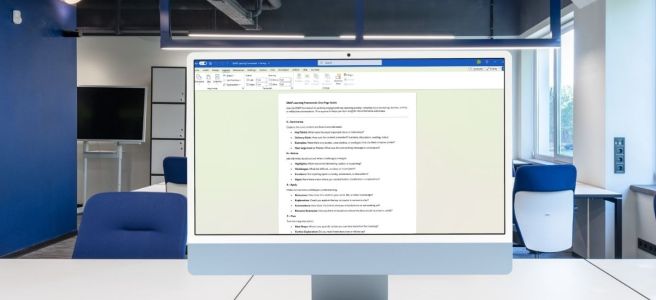
The SNAP Framework is a simple acronym designed to enhance my CPD journaling and transform passive consumption into active, meaningful learning.
S – Summarize
Immediately after engaging with content (lecture, article, workshop), summarize the core points. Ask yourself:
- Key Points: What were the most important ideas or takeaways?
- Delivery Style: How was the content presented? (Lecture, discussion, reading, video)
- Examples: Were there any stories, case studies, or analogies that clarified complex points?
- Main Argument or Thesis: What was the overarching message or conclusion?
N – Notice
Identify what stood out and where challenges emerged.
- Highlights: What was most interesting, useful, or surprising?
- Challenges: What felt difficult, unclear, or incomplete?
- Emotions: Did anything spark curiosity, excitement, or discomfort?
- Gaps: Were there areas where you wanted further clarification or exploration?
A – Apply
Make connections and deepen understanding.
- Relevance: How does this relate to your work, life, or other knowledge?
- Explanation: Could you explain the key concepts to someone else?
- Connections: How does this link to what you already know or are working on?
- Personal Examples: Can you think of situations where this idea would have been useful?
P – Plan
Turn learning into action.
- Next Steps: What’s one specific action you can take based on this learning?
- Further Exploration: Do you need more resources or follow-up?
- Accountability: When will you act, and how will you track progress?
- Measure Impact: How will you know if applying this learning was successful?
Why SNAP Matters
Well, I don’t think it matters in the ultimate sense. And there is nothing magical about the four components of SNAP (AI had offered a range of other ones as well, LEARN, RECAP). But just the addition of a post consumption process where I am required to answer these questions, is helping shift my CPD journaling from a passive log of activities to a more concentrated set of learnings. SNAP prompts intentional reflection, making it easier to integrate new knowledge into my teaching, writing, and ongoing projects.
SNAP and the Role of AI
In 2025, I’ve embraced AI to streamline my learning – using it to summarize lengthy transcripts, highlight core concepts, and even suggest frameworks like SNAP. However, there’s an important caution: AI’s impressive summaries can give a false sense of mastery. For example, when I give AI a podcast episode to summarise, it inevitably produces an impressive summary, which I read and most times, feel is an accurate reflection of the episode. But that familiarity with the summary isn’t learning. To really stand any chance of me taking away key concepts, I am the one that needs to complete the SNAP reflection process, without assistance.
Get Started with SNAP
To put SNAP into action:
- Keep a SNAP checklist handy during learning experiences. I have it printed out on a single page.
- Make quick notes under each SNAP step during and immediately after your learning. I tend to use it at the end, but with familiarity, you might feel comfortable labelling note content with S, N, A or P in a pre-emptive fashion.
- Regularly revisit your notes to reinforce insights and track your real-world applications. Basically, go back to your notes after a break to see if you remember the key ideas and whether you did anything with them.
If you’re interested in refining your CPD, SNAP (or similar frameworks) might offer a straightforward, elegant approach to ensure more of your learning sticks.

 Dr Gareth Furber