I am a Be Well Plan facilitator. The Be Well Plan is a mental health and resilience program in which we teach participants evidence-based psychological tools for improving and maintaning their mental health.
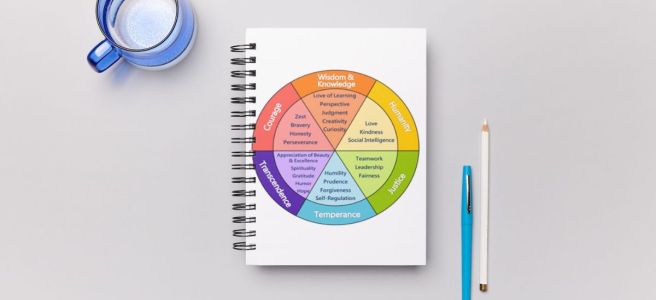
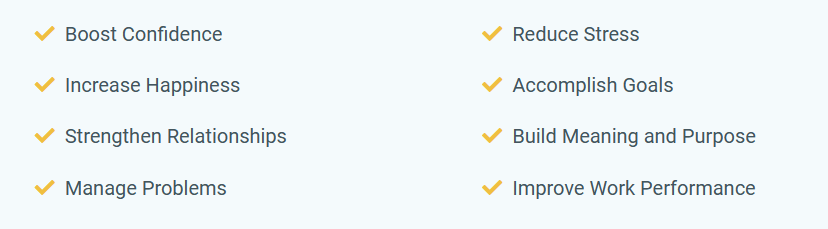
One of the activities we get participants to do is the VIA character survey. Given how popular this survey is, you may have done it yourself. The survey helps people identify positive aspects of their personality that they can leverage to:
In the program, we use the survey to help participants identify what brings their life meaning and give them a language for identifying and describing their own best qualities as well as the qualities of others.
During a recent delivery of the program, when I was talking about character strengths, it was clear to me and participants that I didn’t remember mine 🤦🏼. Not the greatest advertisement for the activity! If I don’t remember my strengths, how am I supposed to action them in my everyday life?!
I left that session with the desire to be more proactive in how I utilise an understanding of character strengths.
Here is how I’ve gone about it.

I started by accessing my most recent report. If you completed the survey quite a while back (e.g. > 12 months), I recommend re-doing it as we do see people’s profiles shift a bit as their life circumstances get them emphasising different strengths at different times.
I then wrote down my top 10 strengths, including the description of it. I chose 10 because it felt like a good compromise between variety and priority.
- Creativity – Thinking of novel and productive ways to conceptualize and do things; includes artistic achievement but is not limited to it.
- Gratitude – Being aware of and thankful for the good things that happen; taking time to express thanks.
- Curiosity – Taking an interest in ongoing experience for its own sake; finding subjects and topics fascinating; exploring and discovering.
- Humor – Liking to laugh and tease; bringing smiles to other people; seeing the light side; making (not necessarily telling) jokes.
- Love of learning – Mastering new skills, topics, and bodies of knowledge, whether on one’s own or formally; related to the strength of curiosity but goes beyond it to describe the tendency to add systematically to what one knows.
- Hope – Expecting the best in the future and working to achieve it; believing that a good future is something that can be brought about.
- Appreciation of Beauty and Excellence – Noticing and appreciating beauty, excellence, and/or skilled performance in various domains of life, from nature to art to mathematics to science to everyday experience.
- Prudence – Being careful about one’s choices; not taking undue risks; not saying or doing things that might later be regretted.
- Spirituality – Having coherent beliefs about the higher purpose and meaning of the universe; knowing where one fits within the larger scheme; having beliefs about the meaning of life that shape conduct and provide comfort.
- Kindness – Doing favors and good deeds for others; helping them; taking care of them.
I then developed a mnemonic to remember these, which I practise most days.
“To create is grate, curious to laugh and learn, hope for beauty, careful to consider the bigger picture and be kind”

Once you can remember your top 10, you are now ready to use them to run thought experiments on how to handle different challenging situations, especially situations you don’t think you are currently handling well.
I’ve chosen a rather banal challenge to illustrate this, but the process can just as readily be applied to more complex situations. I recommend writing it all down, rather than running the thoughts in your head as it makes the insights gained tangible and capable of revisiting.
Start by writing down the challenge: “i’m losing interest in gardening although it has been very important to me in the past”
Note down how you are currently managing that challenge or how you are thinking of responding: “I want to give the plants away and stop gardening. I just sit and look at the garden and think about how much work it takes”
Then use your top 10 strengths to brainstorm alternative next steps….
- Creativity – build something new for the garden, a plant stand or a piece of art
- Gratitude – stop for a moment and be grateful for the garden I have and the lessons I’ve learned gardening
- Curiosity – Pick a gardening topic I know nothing about and do a deep dive
- Humor – find a way to inject some humour into the graden, for example, unusual garden gnomes
- Love of learning – sign up to do a gardening course
- Hope – reminding myself that a good garden outcome is possible if I take deliberate steps to make it happen
- Appreciation of Beauty and Excellence – take detailed photos of plants and turn them into artworks
- Prudence – check whether I am making a rash decision based on negative feelings, not a loss of interest
- Spirituality – remind myself that connection with nature is one path to feeling more connected in the world and getting rid of garden could challenge that
- Kindness – raise some plants to give as gifts

The idea isn’t so much that you are trying to talk yourself out of a course of action (it might be the right thing to do to give up gradening) but to recognise that there are multiple alternative pathways forward, some of which might resonate more because they are aligned to resonant parts of your personality.
In essence this is a kind of problem solving where character strengths are used to elicit novel but personally relevant solutions.
If you’ve found a tangible way to use an understanding of your values/strengths to tackle everyday problems, let me know.
Take care
G

 Dr Gareth Furber